
Koi Pond Care Tips for High Desert Homeowners

June 9, 2026

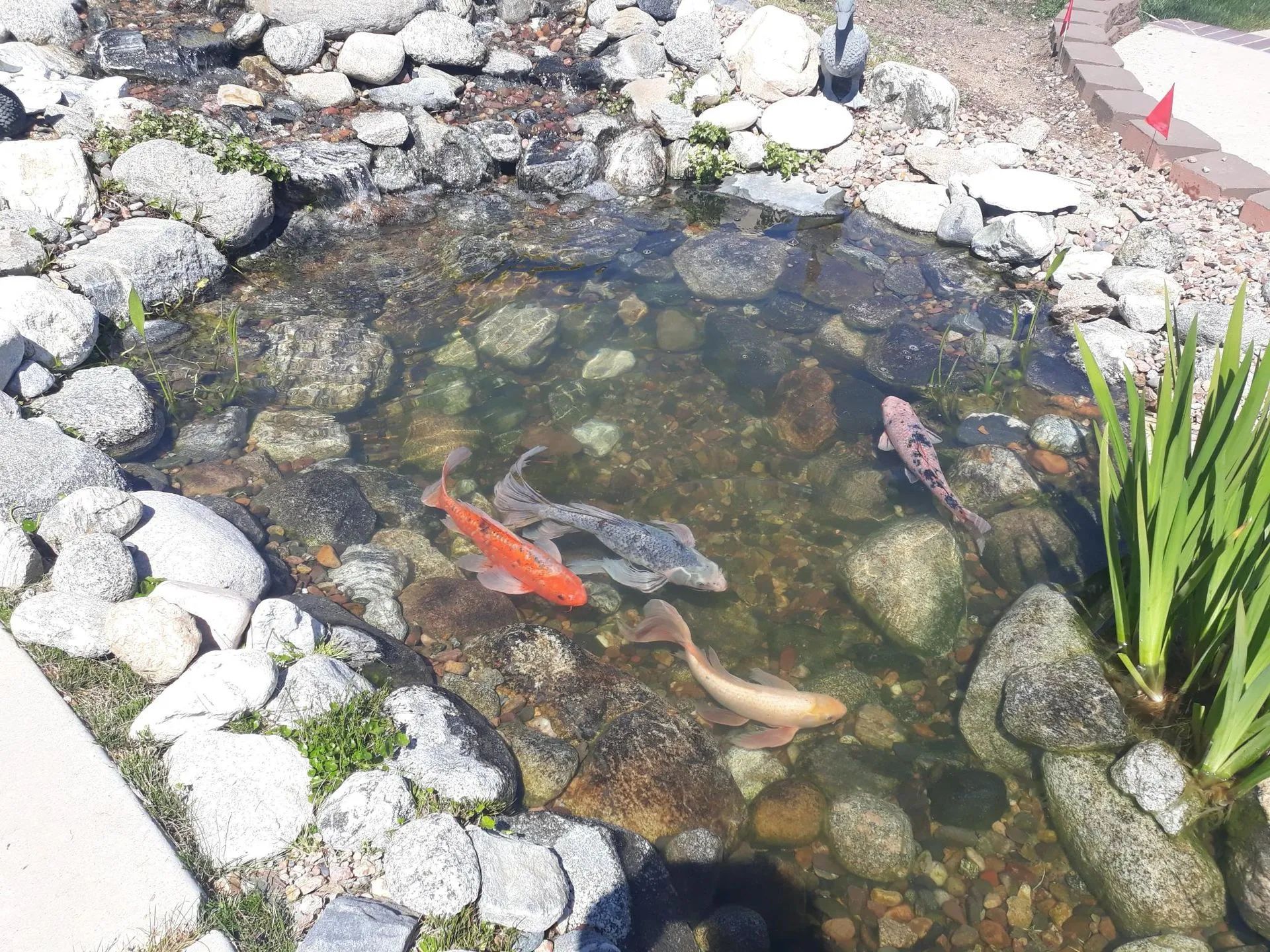
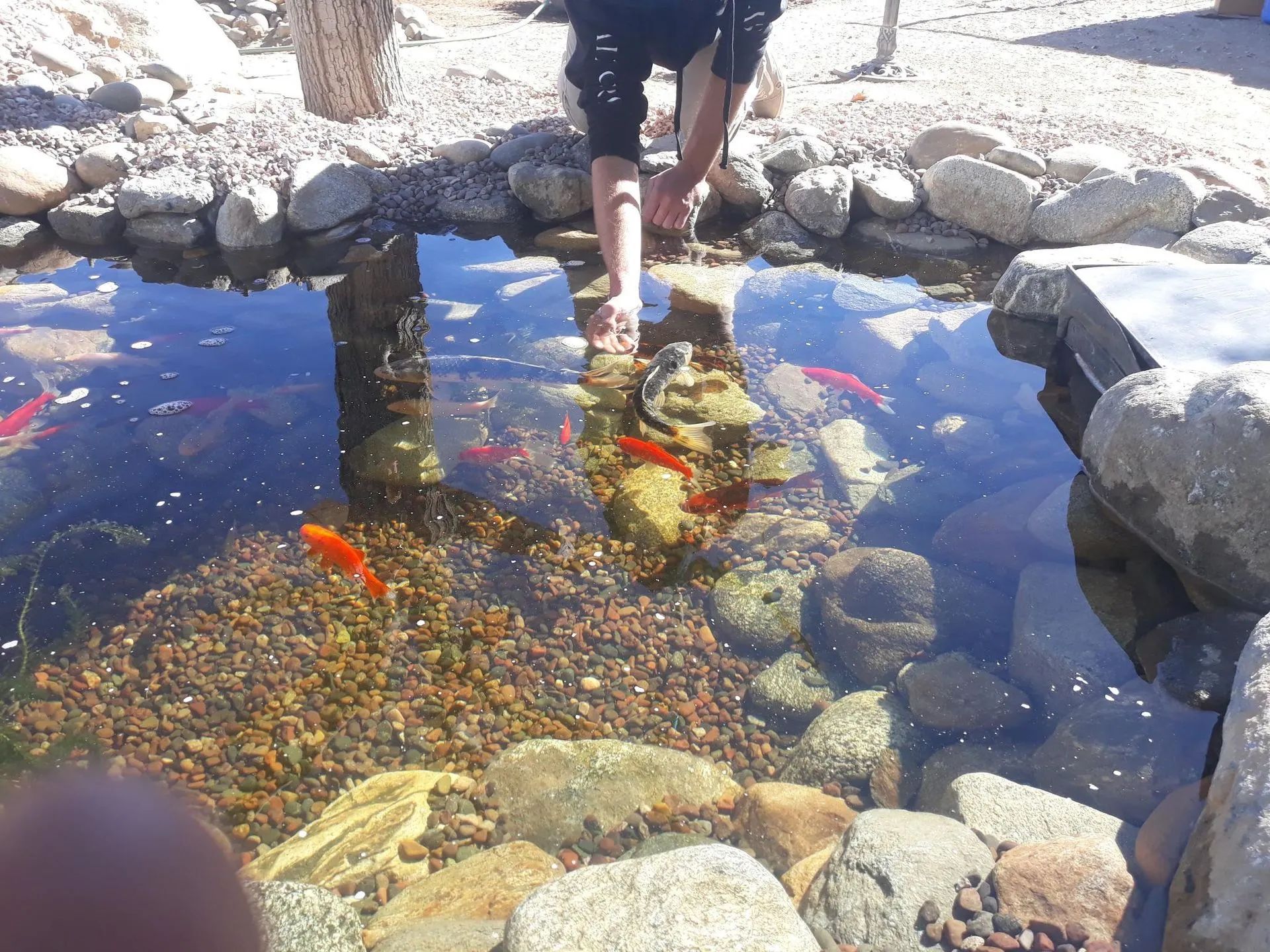
The summer you installed your koi pond, the fish were active, the water ran clear, and the whole setup looked exactly the way you imagined it. By midsummer the following year, you noticed a filmy green cast creeping across the surface, your fish were hovering near the surface gasping, and the water smelled faintly like a wet sock left in a hot car. That sequence of events is not bad luck. It is what happens when a koi pond designed for moderate coastal or Midwest climates operates in a high desert environment without the management adjustments those conditions demand. The Mojave High Desert presents a specific set of stressors that pond owners in other regions simply do not face at the same intensity.


Hesperia, California sits at roughly 3,200 feet in elevation, where summer air temperatures routinely push past 105 degrees Fahrenheit and relative humidity can drop below 10 percent. Those two factors alone separate high desert koi pond management from everything the standard hobbyist guides describe. This article walks through the biological, chemical, and mechanical realities of keeping a koi pond alive and thriving in that environment, covering filtration load, temperature management, water loss, oxygen levels, and seasonal transition care. If you own a pond in the Victor Valley or the surrounding high desert communities, this is the information your pond actually needs.

Why High Desert Heat Creates a Different Biological Load

The single most underappreciated threat to a koi pond in the Mojave High Desert is not predators or algae. It is the relationship between water temperature and dissolved oxygen, and how that relationship collapses at sustained high temperatures.

  • The Oxygen Saturation Problem

    Water holds less dissolved oxygen as it warms. At 60 degrees Fahrenheit, water can hold approximately 11.3 milligrams of oxygen per liter. At 86 degrees, that number drops to around 7.6 milligrams per liter. In Hesperia during July and August, pond water in a shallow or unshaded basin can reach 88 to 92 degrees by mid-afternoon, pushing dissolved oxygen levels to a range where koi begin showing stress before a single other variable enters the picture.


    Koi require a minimum of 6 milligrams of oxygen per liter to remain healthy. When temperatures climb and stocking density is anything above light, that margin disappears within hours. Pond owners who notice fish crowding near waterfalls or return jets in the afternoon are watching oxygen-seeking behavior, not curiosity. Increasing surface agitation through additional aeration, a surface skimmer with a wide weir, or a venturi return fitting on the pump keeps the oxygen exchange surface active during peak heat.

  • Ammonia Toxicity Spikes in Warm Water

    Temperature does not only affect oxygen. Ammonia, the primary nitrogenous waste produced by koi, becomes more toxic in alkaline, warm water. At a pH of 7.5 and a water temperature of 86 degrees, a measurable portion of the ammonia in the pond shifts from ionized ammonium, which is relatively safe, to free ammonia, which is acutely toxic. At pH 8.0 and temperatures above 85 degrees, free ammonia toxicity increases sharply.


    High desert ponds frequently run above pH 7.8 due to local water chemistry and the evaporative concentration of minerals. When you are topping off a pond with Hesperia municipal water and losing two to three inches of depth per week to evaporation, you are also concentrating every dissolved mineral in the system. Ammonia levels that would be acceptable in a 70-degree pond become dangerous at 90 degrees with elevated pH. Testing both ammonia and pH together during heat events, rather than separately on a fixed schedule, gives you the information you need before stress becomes mortality.

Filtration Systems That Actually Handle Desert Conditions

A filtration system sized for a 3,000-gallon pond in San Diego is almost always undersized for the same pond in Hesperia. Higher temperatures accelerate biological processes, fish eat more in warm water, and the waste load on a biological filter during a sustained heat event increases faster than most residential systems are built to manage.

Biological Filter Capacity and Turnover Rate

The biological stage of a pond filter works by colonizing a porous media with nitrifying bacteria, primarily Nitrosomonas and Nitrobacter species, which convert ammonia to nitrite and then to nitrate. Those bacteria are temperature-sensitive. They perform best between 65 and 80 degrees Fahrenheit. Above 85 degrees, their activity does not disappear, but the volume of waste the system must process rises while the efficiency of the bacteria plateaus.


The practical consequence is that a biological filter with a media volume appropriate for 50 koi at 70 degrees may struggle to keep ammonia in check with the same 50 koi at 88 degrees, even though nothing else has changed. A professional approach to this problem involves sizing the filter for summer peak load, not average load. That typically means a biological media volume of at least 10 percent of the total pond volume, with a pump turnover rate that moves the full pond volume through the filter every 60 to 90 minutes.

Mechanical Pre-Filtration in High-Dust Environments

The Mojave High Desert adds a mechanical filtration challenge that pond owners in other regions rarely face: airborne particulate. Dust storms, the Santa Ana wind events that move through the region, and the general fine particulate that settles from dry, unpaved surroundings all enter your pond. That material clogs mechanical pre-filters rapidly and contributes to elevated organic load in the water column.


A drum filter or a pressurized bead filter with automated backwash capability handles high-particulate environments far better than a static mat or brush pre-filter. Static mechanical media in a high desert pond during the summer months may need manual cleaning every three to four days. Automated backwash systems reduce that burden and, more importantly, prevent the anaerobic conditions that develop in a clogged static filter. A clogged pre-filter does not just slow water flow. It becomes an active source of hydrogen sulfide and additional ammonia as organic material breaks down without oxygen.


TIP: Press your hand against the pre-filter media and check for resistance to water flow. If you can feel a notable pressure difference between the inlet and outlet side, the filter needs cleaning regardless of what the schedule says. In July and August in Hesperia, that may mean cleaning every two days during a dust event.

Managing Water Loss and Chemistry Through Evaporation

A koi pond in the high desert is not a closed system. It loses water every day, and every gallon it loses leaves behind a proportionally concentrated dose of whatever was dissolved in it.

  • Calculating and Compensating for Evaporative Loss

    Evaporation rates for an exposed water surface in the Hesperia area during peak summer average between 0.25 and 0.35 inches of depth per day under calm conditions. A 10-foot by 15-foot pond with a surface area of 150 square feet loses between 23 and 33 gallons per day to evaporation before any splash loss from waterfalls or stream features is added. That figure climbs during Santa Ana events, when low humidity and elevated wind speeds can push evaporation past 0.5 inches per day.


    Auto-fill valves with a float mechanism address the volume loss. What they do not address is the chemistry consequence. Every 100 gallons of evaporated water leaves behind the full dissolved mineral content from those 100 gallons. Over a season of constant top-off, calcium carbonate hardness, magnesium, and trace minerals concentrate in the pond. A pond that starts the season at 200 parts per million total dissolved solids may test at 400 to 600 parts per million by late summer without any partial water exchanges.

  • Partial Water Changes as a Reset Tool

    Planned partial water changes are the correct response to mineral concentration drift, and they serve a second function simultaneously: they dilute accumulated nitrate. Nitrate, the end product of biological filtration, is relatively non-toxic at moderate levels but becomes a chronic stressor to koi above 40 to 80 parts per million over sustained exposure.


    WARNING: Do not perform a large water change on a high desert pond in peak summer using untempered tap water. Municipal water in the high desert sits in distribution lines that can reach 90 degrees or above during a heat wave. Introducing a large volume of 90-degree chlorinated water directly into a stressed pond can cause rapid temperature and chemical shock. Age and dechlorinate any top-off or change water before it enters the pond, and match temperature within five degrees.

Managing a Koi Pond the High Desert Way

At Vivid Watergardens, we have spent 25 years building and maintaining koi ponds throughout the Hesperia area, and that depth of local experience shapes every service call we make. We understand the specific demands that Victor Valley summers place on pond filtration, water chemistry, and koi health, because we have managed those conditions across hundreds of installations in this region. Our work covers Hesperia, Apple Valley, Victorville, and Phelan, and we approach every pond in those communities with the same attention to local environmental factors that no generic maintenance checklist can account for. We design biological filtration systems sized for peak summer load, not average annual conditions. We build ponds to depth specifications that provide real thermal refuge during a heat event. We walk clients through spring startup protocols and fall feeding transitions that protect fish through the most vulnerable windows of the year. When water chemistry drifts from evaporative concentration, we have the tools and the knowledge to correct it without creating the secondary shock that rushed interventions can cause. Our work in the Mojave High Desert has taught us that this region requires a level of specificity that most pond contractors never develop, and that specificity is what we bring to every pond we touch in the Victor Valley.

Rock waterfall flowing into a small pond, surrounded by stacked stones and a wooden fence
May 29, 2026
Ponds add beauty, movement, and balance to residential and commercial landscapes, but maintaining clean and healthy water requires more attention than many property owners expect. In Hesperia, California, pond maintenance becomes especially important because of the region’s dry climate,
A dry creek bed landscaping design featuring various river stones, gravel, shrubs, and a small black planter.
April 14, 2026
Transforming a backyard into a tranquil retreat has become a growing trend for homeowners seeking to enhance their outdoor living spaces. Beyond aesthetics, well-designed backyard retreats offer a sanctuary from daily stress, a place for relaxation, and a unique setting for entertaining friends and family.
Clear water in a rocky pond reflecting tall pine trees and a bright blue sky.
March 13, 2026
Creating and maintaining a healthy, vibrant pond is both an art and a science. From the initial design to long-term upkeep, every pond in Hesperia requires careful attention to water quality, aquatic plants, fish health, and structural components. One often overlooked factor in pond success is the source of supplies.
Rock waterfall flowing into a small pond, surrounded by stacked stones and a wooden fence
May 29, 2026
Ponds add beauty, movement, and balance to residential and commercial landscapes, but maintaining clean and healthy water requires more attention than many property owners expect. In Hesperia, California, pond maintenance becomes especially important because of the region’s dry climate,
A dry creek bed landscaping design featuring various river stones, gravel, shrubs, and a small black planter.
April 14, 2026
Transforming a backyard into a tranquil retreat has become a growing trend for homeowners seeking to enhance their outdoor living spaces. Beyond aesthetics, well-designed backyard retreats offer a sanctuary from daily stress, a place for relaxation, and a unique setting for entertaining friends and family.
Clear water in a rocky pond reflecting tall pine trees and a bright blue sky.
March 13, 2026
Creating and maintaining a healthy, vibrant pond is both an art and a science. From the initial design to long-term upkeep, every pond in Hesperia requires careful attention to water quality, aquatic plants, fish health, and structural components. One often overlooked factor in pond success is the source of supplies.
Show More