
Pond Leak Warning Signs and What Causes Them
The clearest sign of a pond leak is water loss that's faster or more persistent than evaporation can explain, and that keeps dropping past a certain level. Warning signs include the water stopping at the same spot each time (often pointing to a leak at that level), soggy or eroding ground around the pond, algae or mineral lines showing a dropping level, and the pump running dry. Common causes are liner tears or punctures, problems at the waterfall or stream, leaks around plumbing and fittings, settling or shifting that lowers an edge, and water splashing or wicking out. In a hot, dry climate, the first step is ruling out evaporation, then finding where the water is actually going.
If your pond seems to be drinking more water than it used to, and you're topping it off more often than feels normal, it's natural to worry about a leak. But before you tear into the liner, there's an important first question, especially in a hot, dry climate like the High Desert: is it actually a leak, or is it evaporation? Ponds here can lose a surprising amount of water to heat, dry air, and wind alone, so the real skill is telling a genuine leak apart from normal seasonal loss, and then, if it is a leak, figuring out where the water's going.
That's what this guide is about: the warning signs that point to a real pond leak (versus just evaporation), and the common causes behind them. Knowing what to look for helps you catch a leak before it drains your pond, stresses your koi, or undermines the ground around it, and helps you avoid chasing a "leak" that's really just the desert doing its thing. Here's how to read the signs and understand what causes pond leaks.
First: Is It a Leak or Just Evaporation?
Before calling anything a leak, it's worth ruling out evaporation, because in the High Desert's heat, dry air, and wind, a pond can lose real water without any leak at all.
Evaporation is normal, and in a hot, dry, windy climate it can be significant, especially in summer. A pond, stream, or waterfall exposed to sun and wind loses water off its surface daily, and a moving-water feature (a waterfall or stream) loses even more because so much surface area is exposed to the air. So some ongoing water loss, and more of it in the heat, is expected here and isn't a leak. The mistake is assuming any drop means a hole in the liner.
The way to tell them apart comes down to the pattern. Evaporation is relatively slow and steady, a modest drop spread across the whole pond over days, and it doesn't keep going below the pump or a particular level. A leak tends to be faster, more persistent, or tied to a specific level the water keeps dropping to. A classic test is to watch where the water stabilizes: if it falls and then stops at a certain point (say, the bottom of the waterfall or a spot on the liner), that's a strong hint of a leak at that level, whereas even evaporation from the whole surface just keeps slowly lowering. Establishing whether the loss is beyond what evaporation explains is the real first step, and it's what the warning signs below help you judge.
The Warning Signs of a Real Pond Leak
Once you're past normal evaporation, certain signs point to an actual leak. Here's what to watch for.
Water loss faster than evaporation can explain
If you're losing more than a modest amount, or topping off far more often than the heat alone would justify, that excess loss is the core warning sign of a leak. It's the amount and speed beyond expected evaporation that matters.
The water keeps dropping to, and stopping at, the same level
If the pond falls and then holds at a particular spot each time, a leak at that level is a likely cause, water escapes down to the leak, then stops. Noticing where it stabilizes is one of the most telling signs and often points you toward the location.
Soggy, eroding, or unusually wet ground around the pond
Water escaping the pond has to go somewhere. Persistently damp, muddy, soft, or eroding ground around the pond, stream, or waterfall, when the rest of the area is dry, can signal water leaking out into it.
Mineral or algae lines showing a dropping level
As the level falls, you may see a "ring," mineral/hard-water deposits or an algae line, marking where the water used to sit, showing the loss is real and ongoing.
The pump running dry or sucking air
If the level drops enough that the pump loses prime, runs dry, or starts pulling air, the water has fallen below normal, another sign loss is outpacing what you'd expect and the pump is now at risk.
Faster loss when the waterfall or stream is running
If the pond drops noticeably faster with the waterfall/stream on than off, that points to a leak somewhere in the moving-water part of the system rather than the main basin.
Reading these together, especially excess loss plus a level the water keeps stopping at, is how you confirm a leak and start narrowing down where it is. The next question is what's causing it.
Water loss faster than evaporation can explain
Tip:
To gauge whether it's really a leak, top the pond to full, then track how much it drops over a day or two in similar weather, noting whether it keeps falling past the pump or settles at a specific level. Watching where the water stabilizes is especially telling: if it stops at the bottom of the waterfall, suspect the stream or falls; if it stops at a spot on the basin, suspect the liner there; if it only stops when it's very low, the leak is low. This simple observation often points you to the leak's location before anyone touches the liner, saving guesswork.
What Actually Causes Pond Leaks
When a pond is genuinely leaking, the cause is usually one of a handful of common culprits. Understanding them helps you know what's likely and why professional diagnosis matters.
Liner tears, punctures, or holes
The liner is the pond's waterproof barrier, and a tear, puncture, or hole in it lets water escape. Damage can come from sharp objects, roots, wear over time, or an animal, and even a small puncture below the waterline steadily loses water. This is one of the most common leak sources, and the water typically drops to the level of the hole and stops.
Problems at the waterfall, stream, or spillway
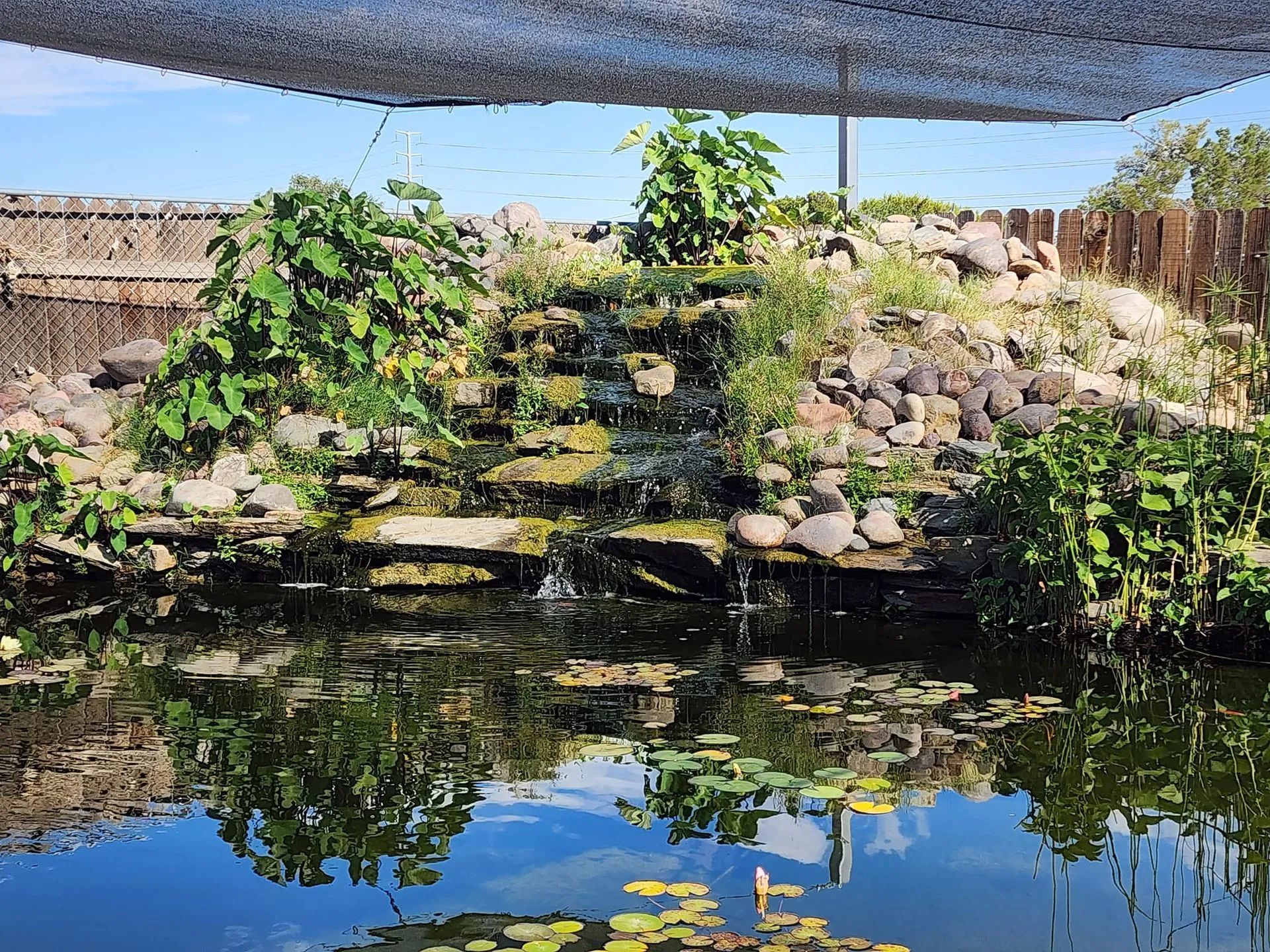
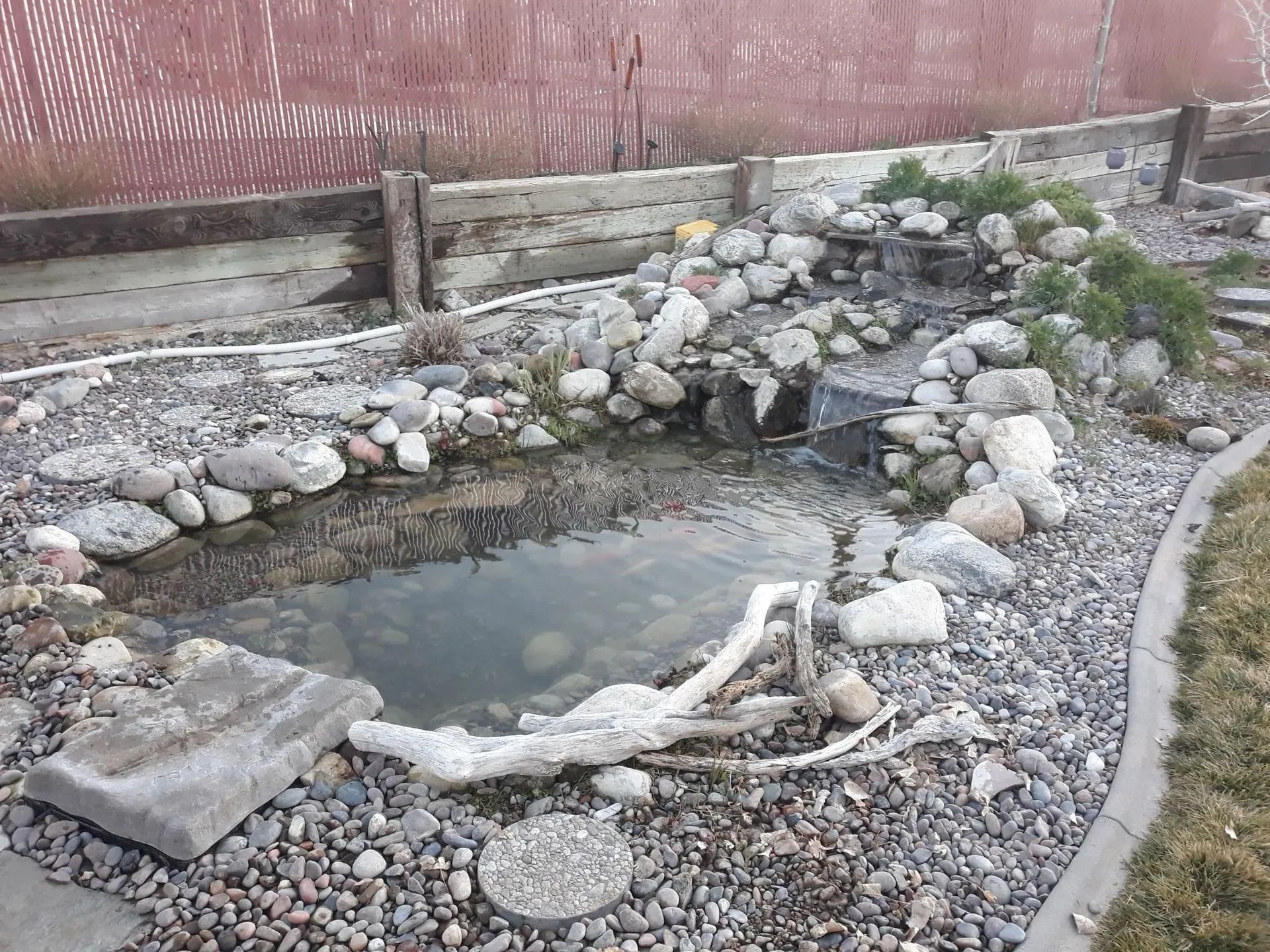
Moving-water features are frequent leak points. Water can escape where the liner meets the waterfall or stream, splash over the edges, or slip behind or under the feature, especially if a rock has shifted or the liner edge has settled below the water path. That's why a pond that loses water faster with the falls running often has its leak here.
Leaks around plumbing, fittings, and connections
The pump, plumbing, tubing, and their connections and fittings can develop leaks, at a loose or failed fitting, a cracked line, or a bad seal, letting water escape from the circulation system rather than the basin itself.
Settling, shifting, or a low edge
Over time the ground can settle or shift, or an edge of the pond or stream can drop below the others. Water then flows or spills out over that low or settled point, which acts like a leak even though the liner may be intact.
Splash-out and wicking
Describe the item or answer the question so that site visitors who are interested get more information. You can emphasize this text with bullets, italics or bold, and add links.
Water loss faster than evaporation can explain
Warning:
Don't ignore a real pond leak or just keep topping it off indefinitely. A dropping level can expose the pump (causing it to run dry and fail), lower the water your koi and plants depend on, and stress the fish, and in a hot climate a leak plus heavy evaporation can drain a pond dangerously fast. Escaping water can also erode or undermine the ground around the pond over time. And constantly refilling with fresh tap water in a hard-water area keeps adding minerals and chlorine, which isn't ideal for the fish. Finding and fixing the leak protects both your pond and your koi.
Frequently Asked Questions
How can I tell if my pond is leaking or just evaporating?
Look at the pattern. Evaporation is slow and steady, a modest, whole-pond drop over days, and worse in heat and wind, but it keeps lowering gradually. A leak tends to be faster, more persistent, or stops at a specific level the water keeps dropping to. Top the pond off, then watch how fast it falls and whether it settles at a particular spot. Loss beyond what the heat can explain, or a level it repeatedly stops at, points to a leak rather than evaporation.
Why does my pond lose so much water in summer?
Partly because evaporation is high in hot, dry, windy weather, especially with a waterfall or stream exposing lots of surface to the air, so significant summer loss can be normal here and not a leak. But summer heat can also coincide with a real leak, making loss dramatic. The key is comparing the loss to what evaporation alone would cause: modest, steady loss is likely evaporation, while excess or fast loss, or water stopping at a set level, suggests a leak on top of it.
The water drops and then stops at a certain level, what does that mean?
That's a classic leak sign. When a pond falls and holds at a particular spot, water is usually escaping down to a leak at that level and then stopping once it's below it. Where it stabilizes hints at the location: stopping at the bottom of the waterfall points to the stream or falls, stopping at a spot on the basin points to the liner there, and stopping only when very low means a low leak. Pure evaporation, by contrast, just keeps slowly lowering.
What are the most common causes of a pond leak?
The usual culprits are liner tears or punctures, problems at the waterfall, stream, or spillway (a common spot), leaks around plumbing, fittings, and connections, settling or a low edge that lets water spill out, and splash-out or wicking where water is drawn or thrown over an edge. Each shows up differently in where and how fast the water drops, which is why observing the pattern helps identify the cause. Many leaks trace back to the moving-water features.
My pond loses water faster when the waterfall is on. Why?
That usually points to a leak in the moving-water part of the system, the waterfall, stream, or spillway, rather than the main basin. When the falls run, water can escape where the liner meets the feature, splash over the edges, or slip behind or under it, particularly if a rock has shifted or a liner edge has settled below the water path. If the loss largely stops when you turn the falls off, you've narrowed the leak to the waterfall or stream.
Can I just keep topping off the pond instead of fixing the leak?
It's not a good long-term plan. A leak left unaddressed can drop the level enough to expose and damage the pump, stress your koi, and (with heat and evaporation added) drain the pond fast, while escaping water can erode the surrounding ground. Constantly refilling in a hard-water area also keeps adding minerals and chlorine that aren't great for fish. Topping off is a short-term stopgap, finding and fixing the leak is the real solution.
Does hard water or the desert climate affect pond leaks?
The climate mainly affects how you diagnose loss: high evaporation in the heat, dry air, and wind means you have to separate normal evaporation from a true leak. Hard water shows up in the mineral rings that can mark a dropping level, and it's a reason not to keep endlessly topping off with tap water. The desert doesn't cause leaks by itself, but it makes ruling out evaporation the essential first step and makes ongoing loss more costly for your water and fish.
Find Where the Water's Really Going
A pond that's losing water isn't always leaking, in a hot, dry climate, evaporation can account for a lot of it, so the first move is separating normal loss from a real leak. The warning signs that point to an actual leak are loss beyond what evaporation explains, water that keeps dropping to and stopping at a set level, soggy or eroding ground, mineral or algae lines, a pump running dry, and faster loss when the waterfall runs. When it is a leak, the cause is usually a liner tear, a problem at the waterfall or stream, a plumbing or fitting leak, a settled low edge, or splash-out and wicking. Reading the pattern of how and where your pond drops is what points you to the answer, and to a fix that finally holds.
Track down and fix your pond leak instead of topping it off forever — If your pond is losing more water than normal evaporation can explain, or it consistently drops to the same level, there's likely a leak in the liner, waterfall, plumbing, or pond edge. Left untreated, it can expose your pump, stress your koi, and erode the surrounding landscape. With 25 years of experience, Vivid Watergardens provides expert pond leak repair services in Hesperia, Apple Valley, Victorville, and Phelan, accurately locating leaks and repairing the source to restore proper water levels. Reach out today for a professional leak diagnosis before the next hot stretch causes further water loss.