
Best Fish for Backyard Ponds in Southern California

QUICK ANSWER: The best fish for Southern California backyard ponds are koi, single-tail goldfish (comets, commons, and sarasas), shubunkin, and small mosquito-eating fish like gambusia. All of these are cold-water species that stay comfortable in the region's 65°F to 75°F sweet spot and tolerate the wider swings of inland and desert areas when the pond is deep enough, shaded in summer, and kept well oxygenated. Match the number of fish to your pond's volume, and start light rather than crowding the water.
A July afternoon in the High Desert can push a shallow pond's surface past 85°F by mid-day, then drop it twenty degrees after sunset. Coastal yards stay milder, but they still run hot and dry for months at a stretch. Fish that shrug off those swings are the ones worth stocking. The fish that struggle are usually delicate, tropical, or simply too big for the water they were dropped into.
Southern California sits mostly in USDA hardiness zones 9b through 11a, with a Mediterranean pattern of hot, dry summers and mild, wet winters. Water temperatures can range from the low 40s in winter to well past 100°F at the peak of summer, with the calmest, healthiest window landing around 65°F to 75°F in spring and fall. That profile rules out tropical species and points squarely at hardy cold-water fish. Below are the ones that do best here, plus how to stock and care for them across the seasons.
What Southern California's Climate Means for Pond Fish
The region rarely freezes solid, so year-round outdoor ponds are the norm rather than the exception. That is good news for stocking, because koi and goldfish are cold-water fish that do not need heated water as long as the temperature stays above roughly 50°F. Both handle a working range of about 50°F to 85°F and are happiest in that 65°F to 75°F band.
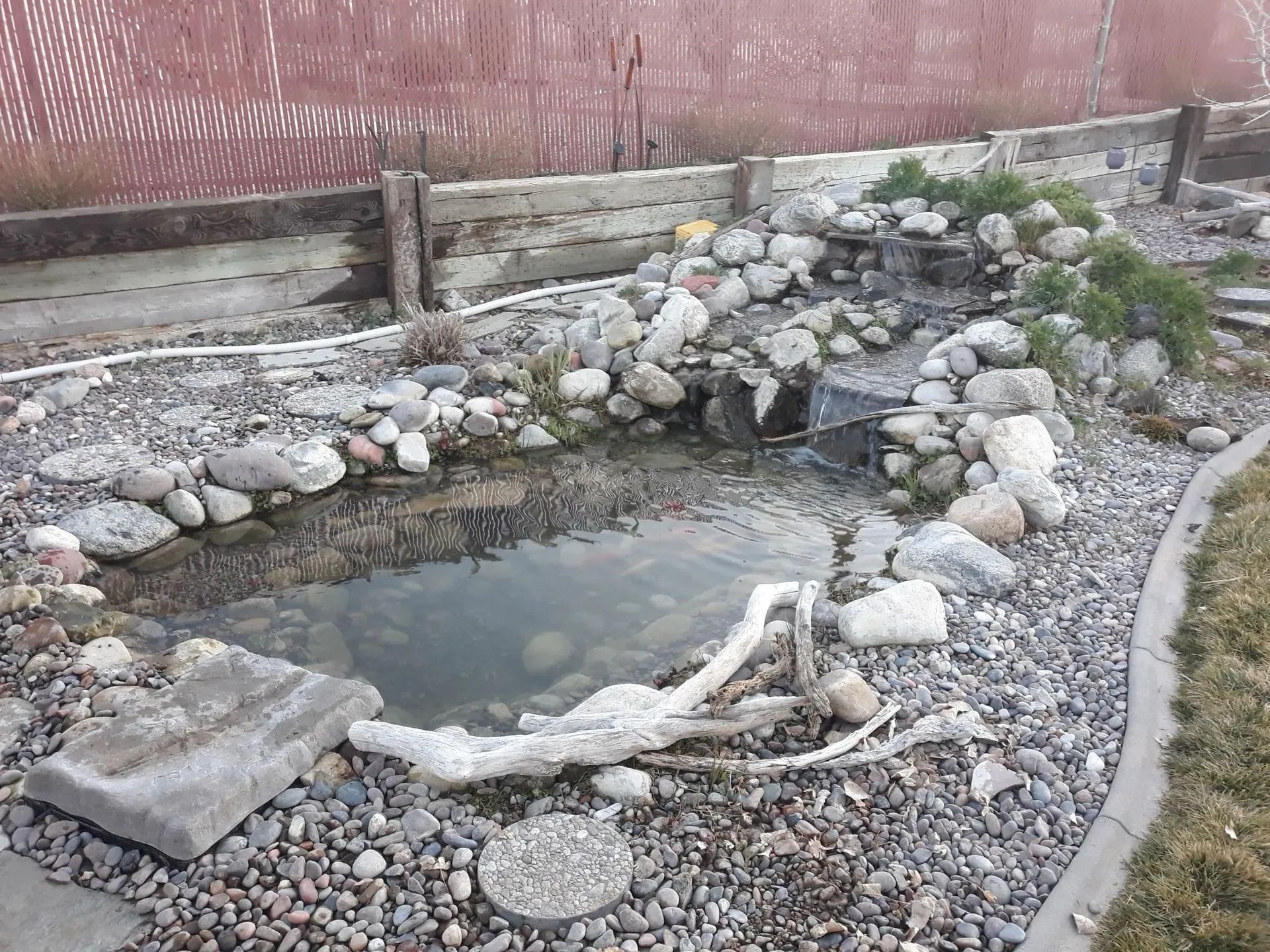
The real pressure here is heat, not cold. Warm water holds less dissolved oxygen, and long summer stretches can stress fish, feed algae, and speed up waste breakdown in the pond. Inland valleys and desert communities such as Hesperia, Victorville, and Apple Valley see the sharpest daily swings, which makes depth, shade, and aeration more important than the exact species you pick. A well-built pond with a deep zone gives fish a cooler place to retreat when the surface bakes.
Koi: The Pond Centerpiece
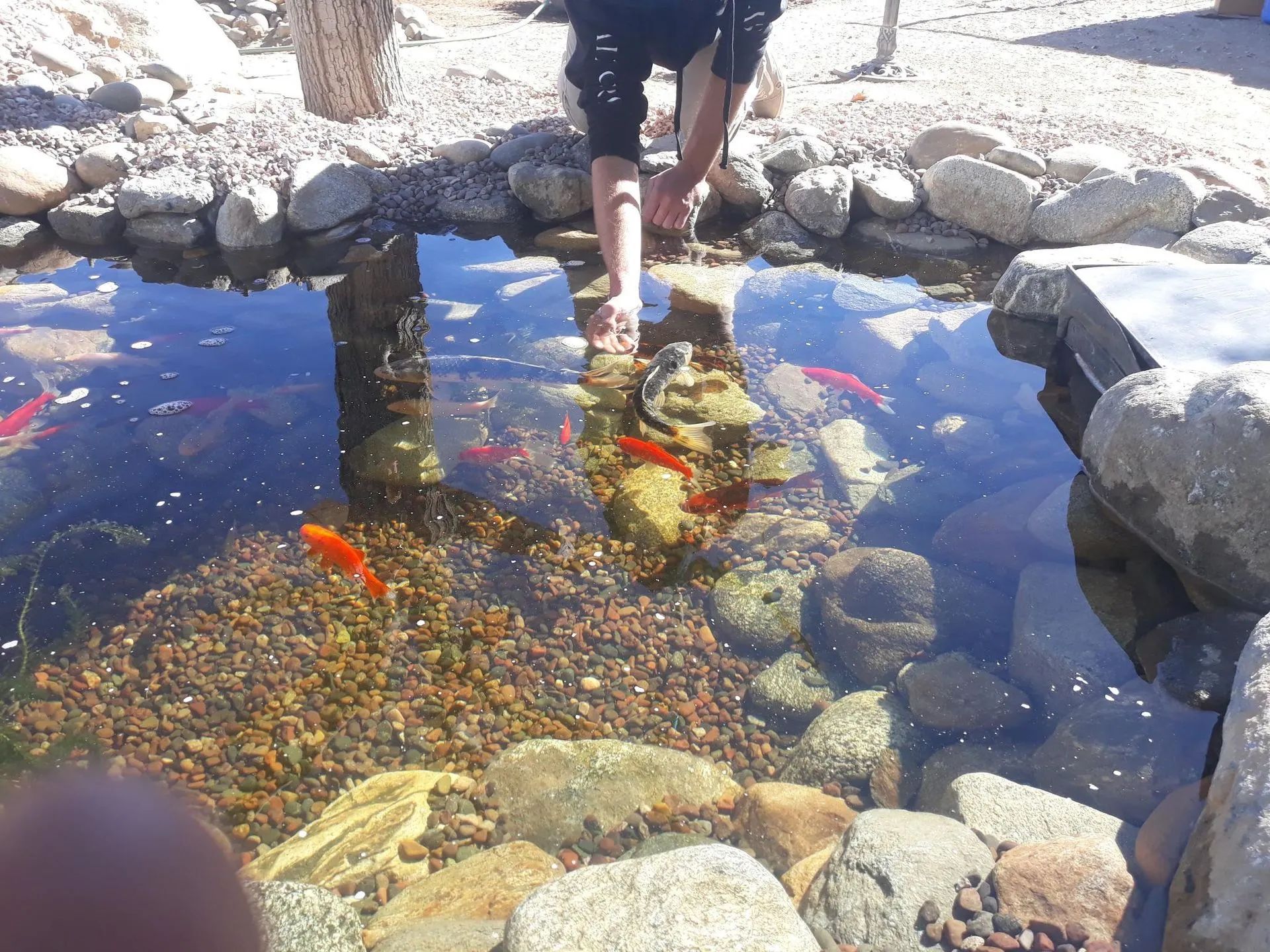
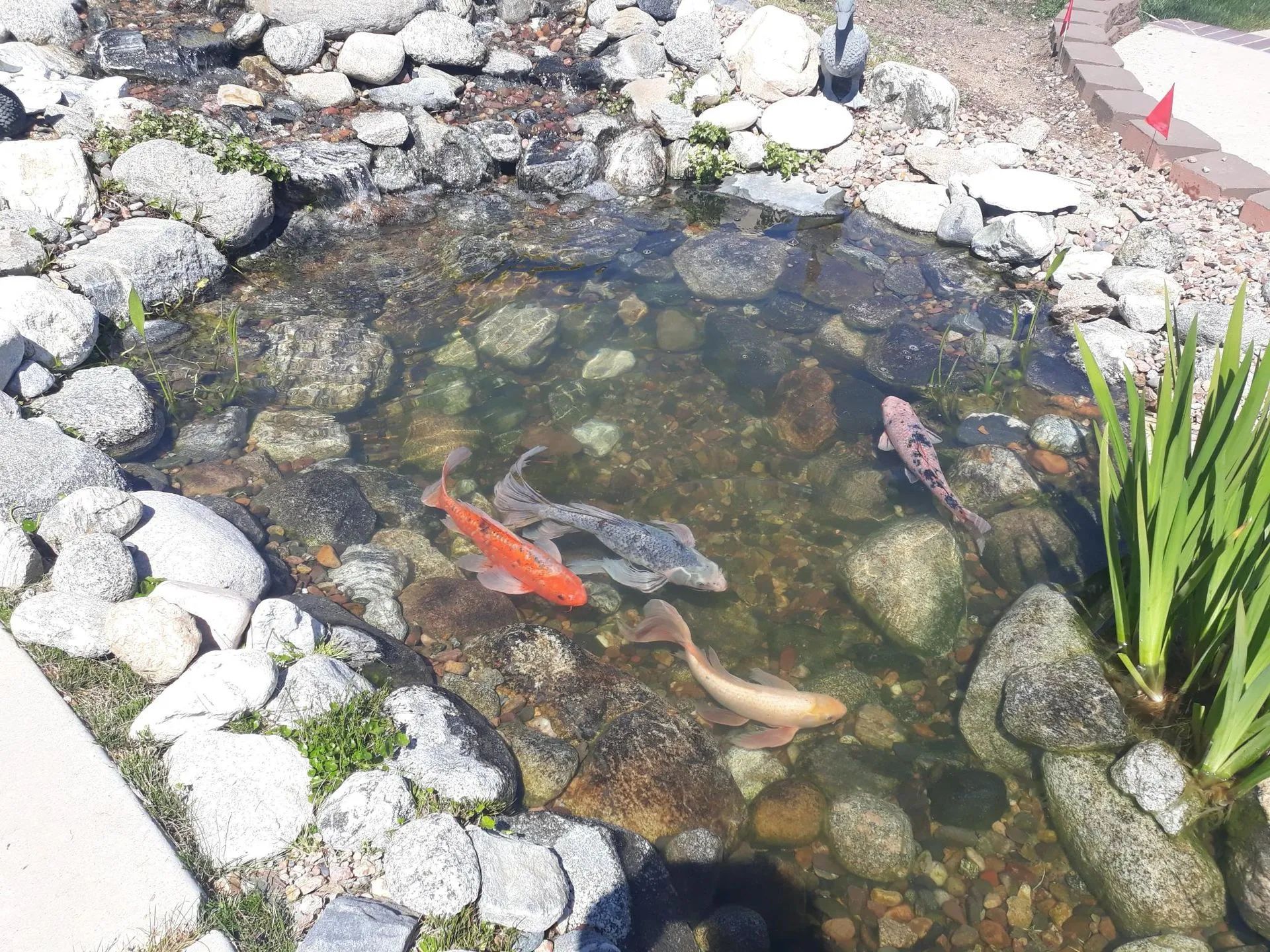
Koi are the fish most people picture when they think of a backyard water garden, and for good reason. They come in a wide spread of colors and scale patterns, grow into a real presence in the water, and can live for decades when their pond is healthy. Most koi reach about 12 to 15 inches long at maturity, hitting roughly half their final length by age 2 and full size by their early teens.
That size is the catch. Koi need room and strong filtration. A pond built for koi should have a generous deep zone, ideally two feet or more, so the fish have cooler, more stable water in summer and enough volume to dilute their waste. They are also curious and will nibble at soft plants, so pairing them with hardy marginals and protected lilies works better than delicate greenery. For anyone in the High Desert set on a koi pond, plan the build around the fish from the start rather than adding koi to a pond that was sized for goldfish.
Goldfish: Hardy and Beginner-Friendly
If koi are the centerpiece, goldfish are the workhorse. Single-tail varieties are the ones suited to open pond life, since they are strong swimmers built for distance. The standouts for Southern California ponds are:
Common goldfish
Plain, tough, and fast-growing, these are as hardy as pond fish get and forgiving of a new keeper's learning curve.
Comet goldfish
Slim-bodied with long, flowing tails, comets add movement and color and handle temperature swings well.
Sarasa comets
A red-and-white comet variety that reads almost like a small koi from above, giving you that classic look in a smaller, hardier package.
Goldfish typically top out around 6 inches, live anywhere from 5 to 15 years depending on care, and reach most of their growth by age 2. They stay healthy in the same cold-water range as koi and put far less strain on a small pond's filtration. Skip the fancy fantails, orandas, and other round-bodied types for open ponds. Those breeds are not built for distance swimming and do better in sheltered setups.
Shubunkin: Color Without the Koi Footprint
Shubunkin are a single-tailed goldfish prized for their calico coloring and the pearly sheen of their scales. They deliver a spread of blues, oranges, and blacks similar to koi, but in a fish that fits a medium pond. They do best in groups of at least five, in water at least two feet deep with a volume of around 180 gallons or more. For homeowners who want koi-like color without a koi-scale build, shubunkin are one of the smartest picks in the region.
Working Fish for a Balanced Pond
Not every fish in a pond is there to be admired. A few earn their keep by handling specific jobs.
Mosquito fish (gambusia)
These tiny, plain fish feed on mosquito larvae and are a practical addition to Southern California ponds, where standing water and warm weather can invite mosquitoes. They breed readily and stay out of the way of larger fish.
Rosy red minnows
Small, active, and cold-hardy, these add gentle movement to a pond and pair well with goldfish in wildlife-friendly setups.
A word of caution on plecos and other algae-eating catfish: they are sold as pond cleaners, but they are tropical and do not survive Southern California winters outdoors. They are better suited to indoor tanks than open ponds in this climate.
TIP: When adding any new fish, float the bag or transport container in the pond for 15 to 20 minutes so the water temperatures equalize before you release them. A sudden temperature jump is one of the most common causes of stress in newly stocked fish.
Matching Fish to Pond Size and Depth
The most common mistake in a new pond is too many fish, too soon. Three factors decide how many a pond can hold: waste load, swimming space, and aggression between fish. The safest approach is to start with the fewest fish your pond volume supports, then add more slowly only if the water stays clear and stable.
Depth matters as much as surface area here. A deeper pond buffers the daily temperature swings that inland and desert yards see, holds more oxygen, and gives fish somewhere to go when the top layer heats up. Pair that depth with steady filtration sized to your fish load, and the pond largely takes care of itself.
Keeping Fish Healthy Through Desert Summers and Mild Winters
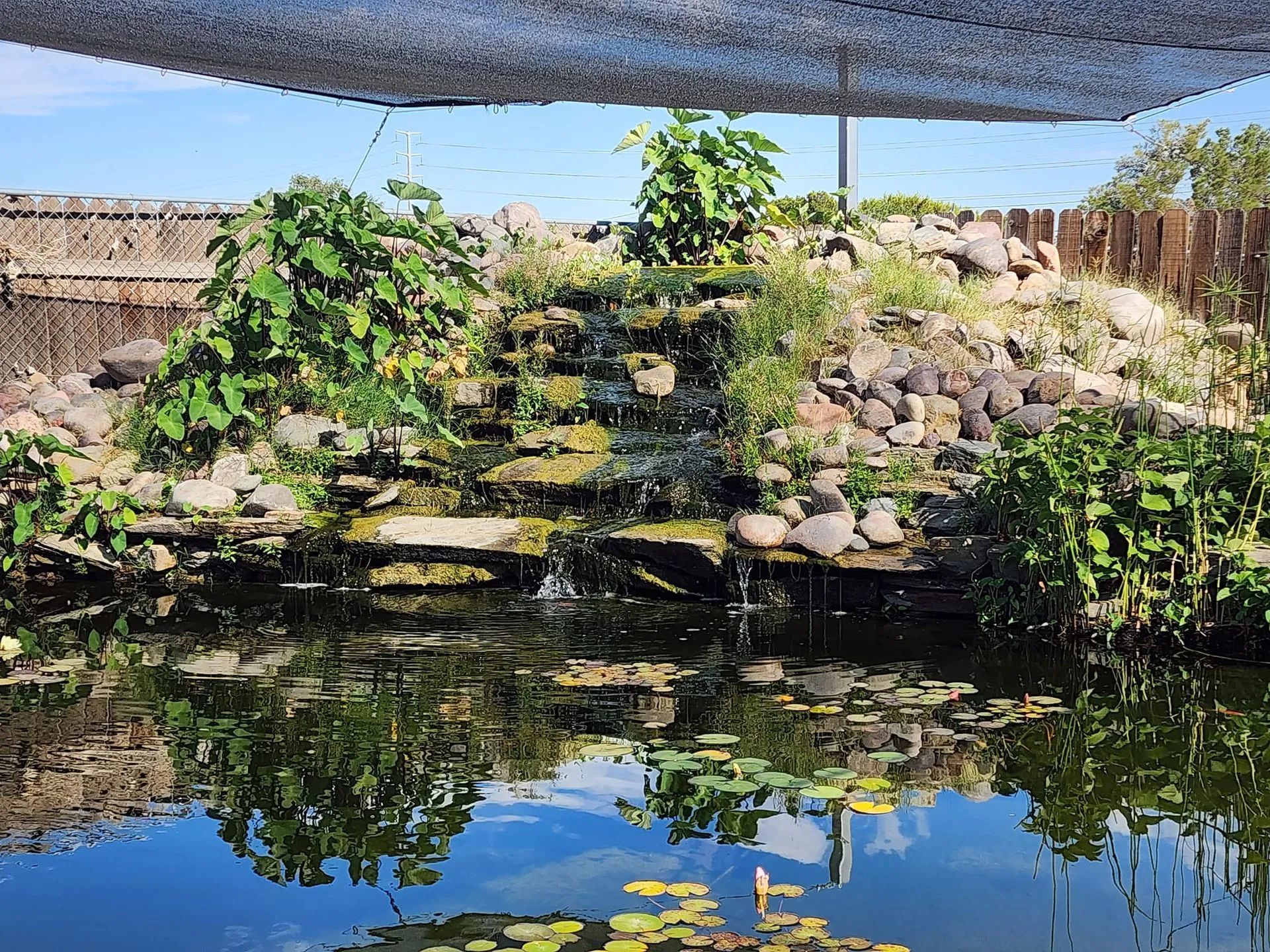
Summer is the season that tests a Southern California pond. As water warms, oxygen drops, so running a waterfall, fountain, or aerator through the hottest months keeps the water moving and breathable. Partial shade, whether from lilies, a sail, or nearby structures, holds surface temperatures down and slows algae. Feed lightly in extreme heat, since uneaten food fouls warm water quickly.
Winter is far gentler across the region. In coastal and valley areas, fish stay active most of the year and simply eat less as the water cools. In colder High Desert pockets where surface ice can form on the coldest nights, a deep zone and a small opening in any ice for gas exchange are usually all a healthy pond needs. Koi and goldfish handle these mild winters comfortably without heaters.
Frequently Asked Questions
Can koi and goldfish live in the same pond in Southern California?
Yes, they cohabit well as cold-water species sharing the same temperature range and diet. The main factor is size and waste load, since koi grow much larger. Build the pond for koi, and goldfish thrive.
What is the best fish for a small backyard pond?
Single-tail goldfish, comets, sarasas, and shubunkin suit small to medium ponds. They stay a manageable size, tolerate temperature swings, and strain filtration less than koi. Save koi for larger, deeper builds with room to grow.
Do pond fish need a heater in Southern California?
In most of the region, no. Koi and goldfish are cold-water fish that stay healthy unless water drops below about 50°F for long. A deep zone and light winter feeding suffice, even in colder areas.
How many fish can I put in my pond?
Start with the fewest your pond volume supports, then build slowly. Waste load, swimming room, and aggression set the ceiling. Overstocking early is the fastest route to cloudy water and stressed fish, so patience pays.
What fish should I avoid in a Southern California pond?
Skip tropical species, which cannot survive the cooler months outdoors, and round-bodied fancy goldfish like orandas and fantails, which struggle with open-pond swimming. Plecos and tropical algae eaters also fail to overwinter here despite marketing.
Can I add fish to a brand-new pond right away?
Give a new pond time to settle and establish beneficial bacteria before stocking, then add fish gradually. Introducing a full load into fresh water causes crashes. Adding fish in small groups lets filtration catch up.
Choosing Pond Fish That Belong in Southern California
The best backyard pond fish for Southern California are the hardy, cold-water species that thrive in this climate rather than fight it. Koi bring a real centerpiece to a deeper build, while single-tail goldfish and shubunkin add color and toughness to ponds of nearly any size, and a few working fish keep the balance in check. Match them to enough depth, shade, and steady aeration, then stock the water patiently instead of crowding it all at once.
Done right, a stocked pond becomes a living part of the yard that holds up season after season, from blistering desert afternoons to cool coastal mornings. Vivid Watergardens
has spent 25
years building and caring for water gardens across Southern California, and that experience shows in ponds sized around their fish from the first shovel of dirt. Choose species that belong here, give them the room they need, and the water rewards that patience for years to come.