
How to Reduce Algae Growth in a Desert Climate
QUICK ANSWER: Algae need four things to grow: nutrients, carbon dioxide, sunlight, and warmth. A desert climate hands them the last two for free, so the winning strategy is to starve algae of the first two and to soften the other two where you can. That means limiting the nutrients that enter the pond (fish food, debris, dust, and mineral concentration from evaporation), adding shade and plant cover to cut light and heat, keeping water moving so it stays cooler and oxygen rich, and running a filter sized for your fish load. No single product does all of that, which is why ponds that are managed as a balanced system stay clearer than ponds that are treated only when they turn green.
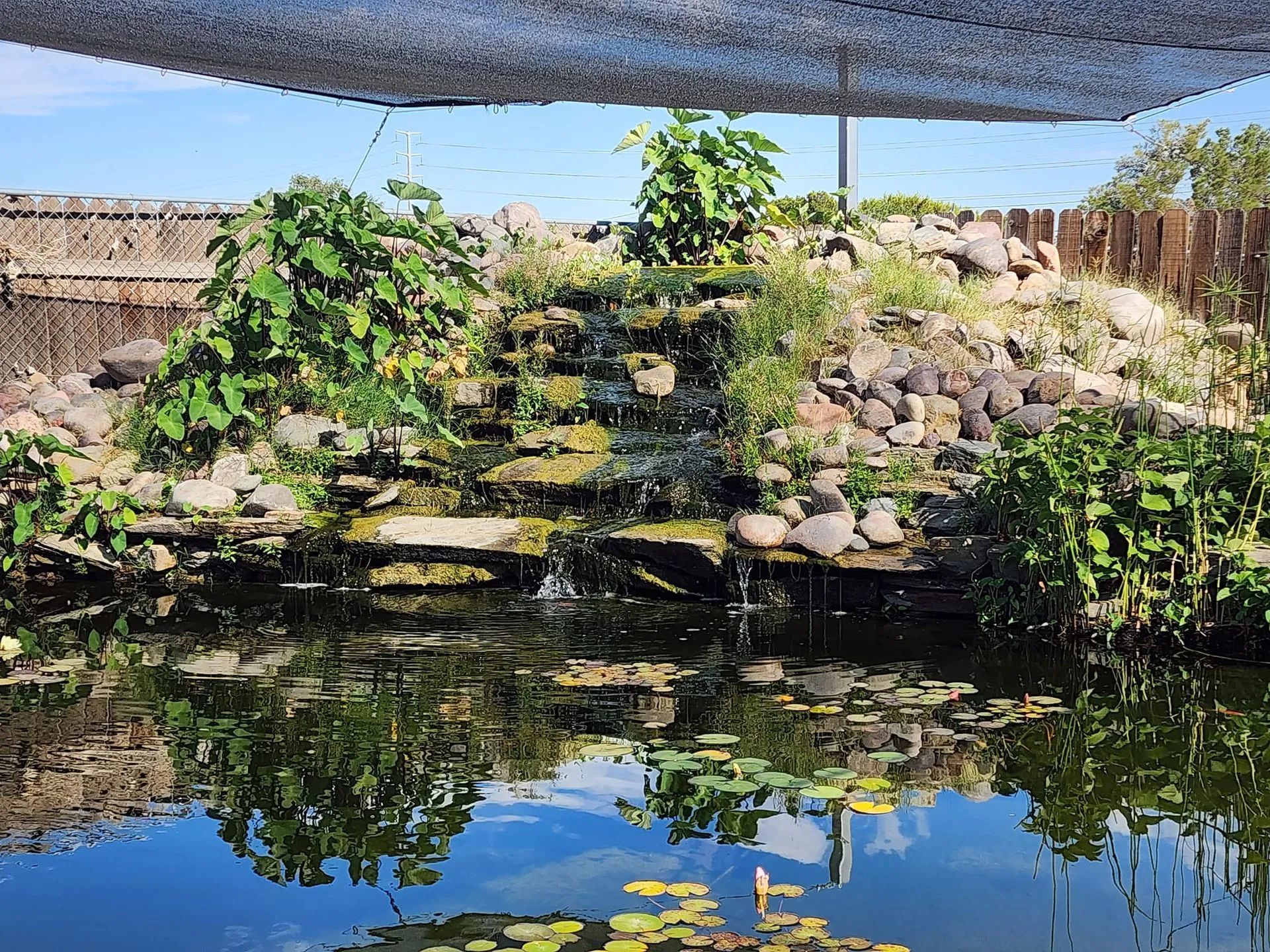
It is a July afternoon in the High Desert. The sun has been on your pond since early morning, the water on the shallow shelf is warm to the touch, and there is a fine green film starting on the rocks near the waterfall. You cleaned that spot two weeks ago. By next week it will be back, thicker, and it will be joined by the hair like strands that wrap around your pump intake.
If that sounds familiar, you are not doing anything wrong. Desert ponds face conditions that most pond advice, written for milder and wetter parts of the country, never accounts for. Algae in a cool, cloudy climate has to wait for a few good weeks of summer. Here, the conditions algae love arrive in late spring and hang around well into the fall. Understanding how the desert speeds algae up is the first step to slowing it down.
Why Algae Grows Faster in the Desert
The basic recipe for algae is the same everywhere. What changes in the desert is how generous the environment is with each ingredient.
Heat That Lasts
In Hesperia, the warm season runs from roughly June through September, with average daily highs above 87 degrees Fahrenheit and July averaging about 94. Shallow ponds warm quickly during this period, which accelerates algae growth while reducing dissolved oxygen levels and creating additional stress for fish.
Sunshine With Almost No Breaks
The High Desert receives abundant sunshine, with clear or mostly clear skies common from late April through early November. September is especially clear. Because algae depends on sunlight for photosynthesis, a pond receiving direct sun for most of the day provides nearly constant conditions for growth.
Evaporation That Concentrates Everything
When pond water evaporates, minerals and dissolved nutrients remain behind. Desert evaporation can reach 40 to 60 inches annually, with summer losses exceeding an inch weekly. Topping off the pond with tap water adds more minerals and nutrients, gradually increasing their concentration throughout the season.
Dust And Debris On The Wind
Desert winds carry fine organic dust, pollen, seed fluff, and leaf litter into exposed ponds. As this material settles and decomposes, it releases nutrients such as phosphorus that algae can use for growth. Ponds without windbreaks collect more debris, increasing the nutrient supply available to algae.
Shallow Edges
University extension guidance identifies shallow water, especially depths under three feet, as an area where algae can establish easily because sunlight reaches the bottom and warms the water quickly. Backyard ponds often contain shallow shelves and stream beds only inches deep, making these areas common starting points for algae.
Cut the Nutrient Supply First
Extension specialists agree that reducing the nutrients entering a pond is the single most effective preventive step. In a desert pond, the nutrient sources are easy to identify.
Feed less than you think you should. Uneaten food and fish waste are the biggest nutrient inputs in most koi ponds. A commonly used guideline is to offer only what your fish will finish in about three minutes and to stop there. In hot weather, when fish are active but the water holds less oxygen, smaller feedings spread across the day are easier on both the fish and the water.
Remove debris before it breaks down. Leaves, blossoms, dead plant stems, and windblown litter all decompose into nutrients. Skim the surface regularly, empty the skimmer basket often in windy weeks, and trim dying foliage from marginal plants before it drops into the water. Removing this material deprives algae of the food they need to grow.
Watch what enters from the yard. Lawn fertilizer, irrigation runoff, and dust from bare soil can all reach a pond. Keep fertilized areas downslope or sealed off from the pond edge, and keep sprinkler spray from arcing into the water.
Clear the bottom.
Sludge that builds up on the pond floor keeps releasing nutrients back into the water long after the leaves that made it are gone. Periodic removal of that layer keeps the nutrient bank from growing.
TIP: Take a look at the pond first thing in the morning and again around four in the afternoon. If the water is clear at dawn and greener by late day, sunlight and warmth are the main drivers. If it looks cloudy or murky even in the early morning, nutrients and filtration are more likely to blame. Knowing which one you are dealing with tells you where to spend your effort.
Shade, Plants, and Surface Cover
Because sunlight and heat are the two ingredients the desert supplies without limit, reducing them has an outsized effect.
Floating And Marginal Plants
Water lilies, water hyacinth where permitted, and other surface plants shade the water while competing with algae for nutrients and carbon dioxide. Choosing plants that tolerate High Desert heat and cold nights creates longer-lasting natural competition that can help limit algae growth.
Structural Shade
A pergola, shade sail, afternoon-shading tree, or west-side planting bed can reduce sunlight and water temperature. Vegetation around the pond also filters the light algae need for photosynthesis. Even several hours of afternoon shade during peak summer heat can help significantly.
Depth Where You Can Get It
A pond with a deeper section generally stays cooler and more stable than one that remains shallow throughout. When building or rebuilding a pond, incorporating a deeper zone provides valuable protection against summer heat and helps create more stable water conditions.
Pond Dye As A Stopgap
Light-blocking pond dyes reduce the wavelengths algae use and can provide temporary relief while plants become established. They are not a permanent solution, but they can work alongside shading, debris removal, nutrient control, and other management steps to slow algae growth.
Keep the Water Moving
Still water in the sun is the easiest place for algae to bloom. Circulation helps in several ways at once.
Cooler, Better Oxygenated Water
A strong pump and proper aeration keep pond water circulating, helping lower temperatures slightly while adding oxygen and moving carbon dioxide. These changes support fish health and can make conditions less favorable for algae, particularly during periods of intense summer heat.
A Waterfall Or Fountain That Does Real Work
Moving water breaks up warm surface layers and keeps the pond mixed more evenly. A properly positioned waterfall or fountain should circulate water toward shallow corners and edges, where stagnant pockets can develop and create conditions that encourage algae growth.
Run The Pump On A Schedule That Fits The Season
During the hottest weeks, avoid long interruptions in water circulation. Check intake screens and skimmer baskets regularly and keep them clear. A partially blocked pump reduces flow, limiting circulation and aeration when the pond needs them most.
Filtration, Biology, and the Role of UV
Filtration removes the particles and dissolved nutrients that feed algae, but it has to match the pond.
Size The Filter For The Fish, Not The Water
A pond with more fish than its filter can handle will accumulate nutrients that encourage algae growth. Every fish and feeding adds to the nutrient load, regardless of how clean the pond appears.
Keep The Biological Filter Working
Beneficial bacteria convert fish waste into forms that plants and filtration systems can process. Avoid rinsing biological filter media with chlorinated tap water, which can kill these bacteria. Instead, clean the media using pond water.
Understand What A UV Clarifier Does
A UV clarifier targets free-floating algae that turns pond water green by causing cells to clump together for filtration. It does not remove attached string algae or the nutrients feeding algae growth, so it works best as one part of balanced pond management.
Barley Straw, Used Realistically
Barley straw works primarily as a preventive measure rather than a cure. It may inhibit free-floating algae more effectively than string algae, can take weeks to work, and should be added before algae becomes established. Results vary, so treat it as supporting control.
Managing Minerals and Top Off Water
This is the part of desert algae control that most guides skip.
Top Off With A Plan
Evaporation concentrates minerals in High Desert ponds. Use water treated for chlorine and chloramine, adding modest amounts regularly instead of allowing levels to drop significantly.
Plan Partial Water Changes
Regular partial water changes with properly conditioned water help prevent mineral and nutrient buildup. Smaller, consistent changes are generally gentler on fish than large sudden replacements.
Test Rather Than Guess
Test ammonia, nitrite, nitrate, pH, and hardness regularly. Rising nitrate or increasing hardness can reveal nutrient and mineral concentration before green water or other visible algae problems appear.
Warning: Be careful with chemical algaecides in a pond that holds fish. A sudden algae die off uses up oxygen as the dead material decomposes, and in hot water that already holds little oxygen it can put your fish at risk. Some products can also harm plants or beneficial bacteria. If a bloom is severe, remove as much as you can by hand and by filtration and increase aeration before considering any treatment.
A Simple Seasonal Routine for the High Desert
Reducing algae is easier when the work is spread through the year instead of piled into one emergency weekend.
Late Winter And Early Spring
Clear debris and sludge, service the pump and filter, and add barley straw if you plan to use it. This is also the time to plant so that new growth is established before the heat arrives.
Late Spring
Confirm that shade features and surface plants are in place. Check the circulation and test the water.
Summer
Skim often, feed in small amounts, top off with conditioned water, and keep the pump running. Check the pond in the afternoon as well as the morning.
Fall
Remove falling leaves and cut back plants so they do not sink and decay. Reduce feeding as the water cools.
Balance Beats Treatment
The desert climate will always favor algae a little. You cannot change the sun or the summer, but you can control what the water has to work with. Cut back the nutrients, shade the water, keep it moving, size the filtration to the fish, and manage minerals as evaporation concentrates them. Do those things consistently and algae becomes a small, tolerable part of a healthy pond instead of a weekly chore..
Frequently Asked Questions
Why does my pond get algae so fast in summer?
Desert summers supply strong sunlight and warm water, two things algae need. Nutrients from food and debris add fuel. Shallow areas heat first, so rocks and streambeds often turn green before the main pond.
Will shade really make a difference?
Yes. Shade reduces the light algae use for photosynthesis and lowers water temperature. Plants, a pergola, or trees casting afternoon shade all help, and even partial shade during the hottest hours slows algae growth noticeably.
Does barley straw work in a desert pond?
It helps as a preventive measure, not a quick fix. It works better on free floating algae than string algae, takes weeks to work, and should go in during spring before algae appears.
How often should I feed koi in hot weather?
Feed small amounts your fish finish in about three minutes. Uneaten food becomes nutrients for algae. In hot weather, smaller portions spread across the day protect water quality and oxygen better than one large meal.
Is a UV clarifier enough to stop algae?
A UV clarifier controls green water from free floating algae, but it does not treat string algae on surfaces or reduce nutrients. It works best alongside good filtration, shade, plants, and regular debris removal.
Why does hard water matter for algae?
Evaporation leaves minerals and nutrients behind, and hard tap water adds more. Over a long summer the concentration rises, which favors algae and stresses fish. Partial water changes and testing keep it in check.
What is the first thing I should do if algae is already growing?
Remove what you can by net or hand, clean the skimmer and filter, cut feeding for a few days, and confirm water is circulating well. Then find the cause, whether nutrients, sun, or weak filtration.
Building a Clearer Pond That Lasts All Summer
The desert will always lean a little in favor of algae, but that does not mean your pond has to lose the battle. Shade, steady circulation, careful feeding, and a filter sized for your fish all work together to keep the water clear. Each habit is small on its own, yet together they change what the sun and the heat have to work with. Ponds that stay clear through July are usually the ones where these steps happen consistently, week after week.
Vivid Watergardens
has spent 25
years
caring for ponds
across Southern California, and the lesson stays the same in every yard. Healthy water comes from understanding how sun, minerals, and nutrients behave in your specific setting, then adjusting before problems appear. Whether your pond is a small backyard feature or a large koi habitat, the goal is a system that stays balanced on its own. With that balance in place, you spend less time scrubbing rocks and more time enjoying the view.