Pond Pump Problems: When to Repair or Replace It
QUICK ANSWER: Repair a pond pump when the problem is something you can clean or swap quickly and safely, such as a clogged intake, debris around the impeller, a worn O ring, or trapped air. Replace it when the impeller is cracked or will not spin by hand, the shaft or its rubber stops are broken, the motor hums without turning, the cord or housing is damaged, or the pump keeps failing again after a thorough cleaning. The deciding questions are whether the fault is mechanical wear or just buildup, whether the pump is still safe to run in water, and whether it still moves enough water for the pond it serves. A pump that fails any of those tests is no longer protecting your fish.
It is a Saturday morning in July and the waterfall that usually splashes over your rocks has gone quiet. The pump is humming, or maybe it is not even doing that. The water is still, the surface is warming in the sun, and you know your koi depend on that circulation more than you do. The question running through your head is a simple one: can this pump be fixed, or is it done?
That question comes up in nearly every High Desert pond sooner or later. A pond pump runs around the clock, often for years, through dusty wind, mineral rich water, and summer heat. Few pieces of household equipment work that hard. The good news is that many pump problems are simple, and a few minutes of careful checking will tell you which kind you have.
Why the Pump Matters More Than Any Other Piece of Equipment
Your pump is the heart of the pond. It lifts water to the filter, feeds the waterfall or stream, and keeps the whole body of water turning over. That movement carries oxygen into the water, brings waste to the filter, and keeps warm water from stratifying in the sun.
Warm water holds less dissolved oxygen, and fish need more of it as the temperature rises. Research on pond water quality notes that fish metabolism roughly doubles for every 10 degrees Celsius of warming. In a Hesperia summer, when the surface can become very warm by afternoon, a stopped pump can turn a comfortable pond into a stressful one in a matter of hours. That is why a pump problem should never wait for the weekend after next.
Start With What You Can See and Hear
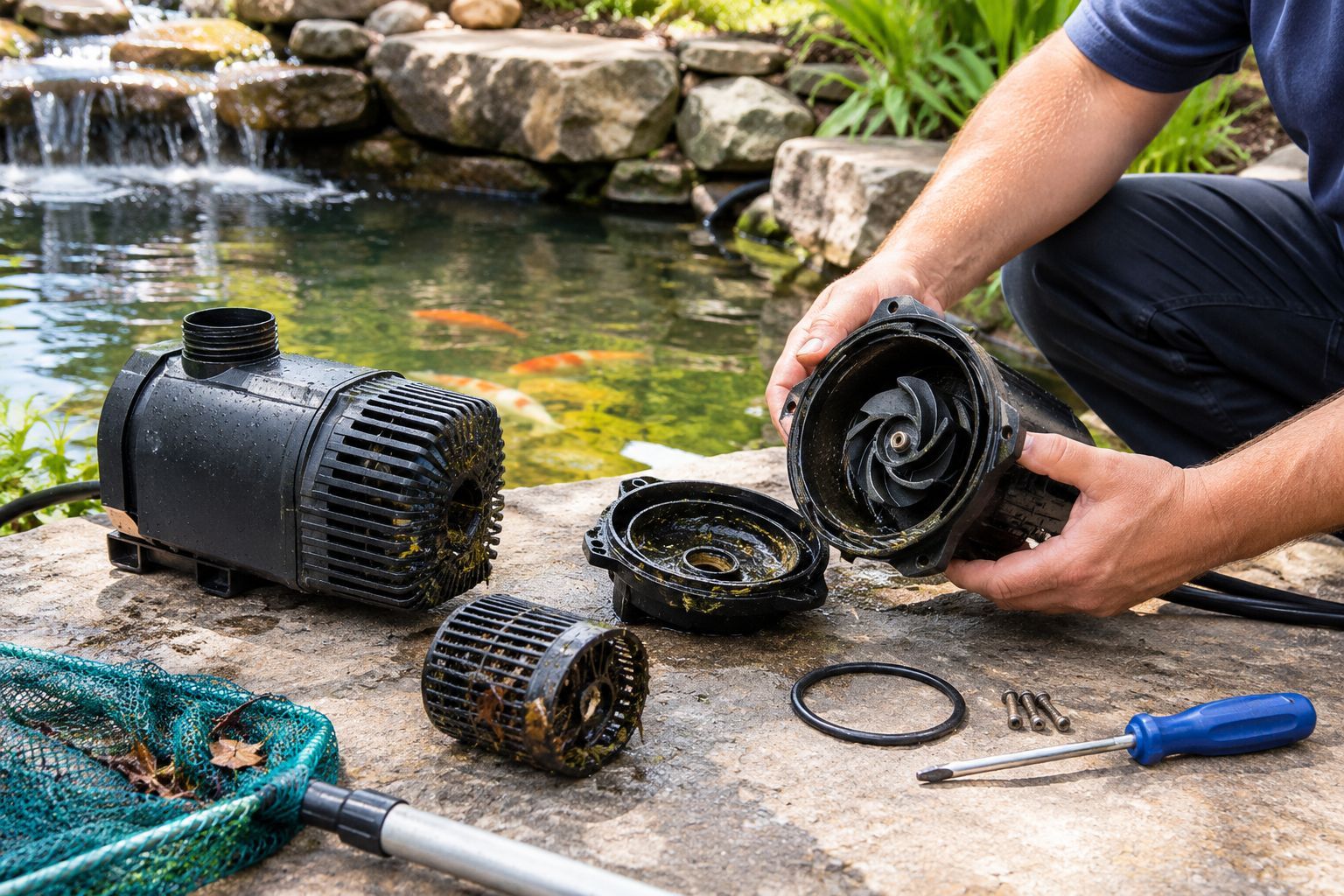
Before deciding anything, switch the pump off at the power source and lift it out. Never inspect a pump that is still plugged in, and if you suspect any electrical issue, leave that part to a qualified electrician. Then look at the pump the way a technician would.
Check The Intake And Outlet
Leaves, algae, seed fluff, and mineral flakes can block screens and tubing. Clear obstructions to restore flow and prevent overheating.
Look For Air
Air locks can cause loud humming and weak flow. Tilt the submerged pump to release trapped air, and ensure water fully covers it.
Turn The Impeller By Hand
Unplug the pump and check whether the impeller moves freely. Stiffness, complete blockage, or unusual rotation may indicate mechanical damage.
Inspect The Seals And Housing
Check for cracked casings, brittle O rings, and loose covers that allow debris inside or water into unwanted areas.
Problems That Are Usually Worth Repairing
Many pump failures are not failures at all. They are buildup, and buildup is repairable.
Debris Around The Impeller
Pond waste, silt, and mineral scale can slow the impeller. Clean the housing, impeller, and intake to restore water flow.
Worn Or Flattened O Rings
Damaged O rings can allow debris inside and reduce pressure. Replacing these inexpensive seals may restore normal pump performance.
An Air Lock
Tilting the pump or briefly repriming it can release trapped air and restore proper water circulation.
A Clogged Prefilter Or Skimmer
Blocked skimmer baskets or prefilters restrict water reaching the pump. Clearing these obstructions may resolve flow problems without repairs.
Mineral Scale From Hard Water
Hard water and evaporation encourage mineral buildup. Soak affected parts in mild vinegar, then rinse thoroughly before returning the pump to the pond.
TIP: Write the date on a piece of tape when you clean the pump. If you find yourself doing the same cleaning every couple of weeks, the pump itself is probably not the problem. A filter that is too small, a missing prefilter, or too much debris entering the water is the real cause, and a pond professional can sort that out.
Signs It Is Time to Replace the Pump
Some faults cannot be repaired in any practical or safe way. These are the signs that point toward replacement.
A Broken Or Cracked Impeller
Cracked impellers or missing vanes reduce water movement. Replacement may be possible, but unavailable parts or worn shafts can make replacement impractical.
A Snapped Shaft Or Missing Rubber Stops
Broken shafts or rubber stops prevent proper impeller alignment. If compatible replacement parts are unavailable, the pump may need replacing.
A Motor That Hums But Does Not Turn
If the clean impeller spins freely but the motor only hums, the motor may have failed. Sealed pump motors should not be opened.
Damaged Cord Or Housing
Cut cords, exposed wiring, or cracked casings create electrical hazards around water. Never return a damaged pump to the pond.
Repeated Tripping Of The Breaker
Repeated ground fault trips may indicate motor or insulation problems. Stop using the pump and have a qualified electrician inspect the circuit.
Chronic Overheating
Persistent overheating despite clean intakes, adequate submersion, and proper water levels may indicate worn bearings or failing motor windings.
A Pump That No Longer Matches The Pond
Added waterfalls, larger fish, upgraded filters, or longer plumbing can increase demand. An undersized pump may need replacement rather than repeated cleaning.
Warning: Never run a pump that is smoking, smells burned, shocks you, or trips the breaker, and never handle one while it is plugged in. Turn off power at the breaker, then remove the pump. Electricity and water do not mix, and a pump that has crossed that line is not worth keeping.
A Simple Way to Decide
When you are on the fence, a few plain questions usually settle it.
Is the problem buildup or wear? Buildup is cleaned. Wear is replaced.
Is the pump safe? If the cord, housing, or breaker behavior raises any doubt, replace it.
Does it keep coming back? One failure after a long run is normal. A pump that fails again and again in the same season is giving you information.
Is the flow right for the pond? A pump should turn over the pond's water at a rate suited to the volume, the waterfall, and the filter. If the stream looks weak even after cleaning, the pump may be undersized, worn, or partly blocked somewhere in the plumbing.
Is it still the right design for this pond? Newer pumps are built for continuous duty and often run more efficiently than older models, which matters for a unit that never gets a day off.
Choosing the Right Replacement
If you do replace the pump, the most common mistake is to pick the same model without asking whether it was ever the right size. The right pump depends on several things working together.
Flow At The Actual Height
Pump output decreases as water travels upward or over waterfalls. Choose a pump that delivers the required flow at the actual operating height.
Pond Volume And Fish Load
Ponds with larger koi populations need stronger circulation and filtration than decorative ponds containing only a few plants.
Plumbing And Filter Fit
Tubing diameter, fittings, and filter capacity affect performance. Excessive pump flow can strain equipment without improving water cleanliness.
Solids Handling
Ponds collecting leaves and algae benefit from solids-handling pumps or effective prefilters that prevent debris from clogging equipment.
Reliability In Heat
Choose a pump designed for continuous operation in warm conditions, especially where prolonged summer heat challenges pond equipment.
Preventing the Next Pump Failure
A pump that is cared for tends to last, and the habits are simple.
Keep the intake clean and the prefilter or skimmer basket emptied, especially during windy weeks. Check the water level often in summer, since evaporation can leave a pump partly exposed. Rinse the pump and impeller a few times a year, and look at the O rings when you do. Keep cords off the ground and out of the sun where possible, and keep the outlet protected. Listen to the pond. A change in sound is usually the first sign of trouble.
Finally, if your pond depends on one pump and the fish are important to you, have a plan for a failure. Knowing how to shut off, lift, and check the pump, and knowing who to call, turns a stressful morning into a routine one.
Frequently Asked Questions
Why is my pond pump running but not moving water?
The most common causes are a clogged intake, debris around the impeller, an air lock, or a broken impeller. Turn the pump off, clean the intake, and tilt it underwater to release trapped air. If the impeller is clean but still does not move water, it may be cracked or the shaft may be damaged.
How long should a pond pump last?
Lifespan depends on the pump design, the quality of the water, and how well it is maintained. Pumps that run in clean, well filtered water with regular maintenance generally last longer than those that work through heavy debris and scale. Wear is gradual, so a pump that has become noisy or weak after many seasons may simply be near the end of its life.
Can I fix a pump that is making a loud noise?
Sometimes. A loud hum with no flow is often an air lock or a clogged impeller, both of which can be fixed. A grinding or rattling sound with the impeller free and clean usually points to worn bearings or a failing motor, and that is a replacement issue.
Why does my pump get hot?
A pump that is not fully submerged, or one that is working against a blockage, can run hot. Clean the intake, make sure the water level is high enough, and check for air. A pump that stays hot even with all of those corrected is likely wearing out inside.
Is it safe to keep resetting the breaker?
No. Repeated tripping means something is wrong with the pump, the cord, or the circuit. Keep the power off and have a qualified electrician look at it before the pump goes back in the water.
What happens to my fish if the pump stops for a day?
It depends on the temperature and how heavily the pond is stocked. In hot weather, oxygen drops quickly in still water, and fish become stressed. If the pump will be down for any length of time, add aeration right away and avoid feeding until circulation is restored.
Should I replace the pump and the filter at the same time?
Not necessarily, but they need to work together. If you are changing the pump size or flow, check that the filter can handle it. A professional can evaluate the whole circulation system and recommend what is actually needed.
Keeping Your Pond Moving All Summer Long
A pond pump rarely fails without warning. Weak flow, new noises, extra heat, and repeated clogging usually appear well before the day it stops. Simple checks often restore a pump with a cleaning or a fresh O ring, while a broken impeller, a failed motor, or damaged wiring points clearly to replacement. Choosing the right size for the pond, the waterfall, and the filter keeps circulation steady, and steady circulation is what protects fish when the weather turns hot.
Vivid Watergardens
has worked across Southern California for 25
years, and its team knows how dust, hard water, and desert heat wear on pumps that never get a day off. Inspecting the pump, plumbing, and filter as one system reveals the real cause of a problem instead of a passing symptom. Owners are left with water that moves the way it should, and a pond they can trust through the hottest afternoons.